1329 stories
·
0 followers

C++: The Documentary released today

1 Share

C++: The Documentary premiered today on YouTube, and it was great to be on the live chat with Bjarne and many other key folks who participated in C++’s history. I’m honored to have been one of hundreds of people who have played a part in advancing Bjarne’s wonderful project over the years.

If you haven’t watched this yet, make it a weekend goal. What a great synopsis of a 40-year success story, from humble beginnings to global adoption to being currently (as of Q3 2025) the fastest-growing of the top four languages in the world… +90% users in the past 3.5 years.

People who appear in the documentary:

  • Bjarne Stroustrup: Bell Labs, Designer and original implementer of C++
  • Alexander Stepanov: Designer of the Standard Template Library
  • Anders Hejlsberg: Creator of C#, TypeScript, and Turbo Pascal
  • Andrei Alexandrescu: Principal Research Scientist, Nvidia & C++ Author
  • Andrew Koenig: Bell Labs, Founding member of the C++ Standards Committee, Researcher, C++ Author & Educator
  • Barbara Moo: Bell Labs, Manager C++ Development Team & C++ Author
  • Brian Kernighan: Bell Labs, Computer Scientist, Co-author of “The C Programming Language”
  • Chris Lattner: Creator of Mojo, LLVM, Clang & Swift
  • Danilo Piparo: Particle Physicist, CERN, ROOT Framework Project Lead
  • Eric Lubin: Software Developer – Lead, Hudson River Trading
  • Gabriel Dos Reis: Software Engineer and Architect, Microsoft; C++ tools builder; Mathematician
  • Herb Sutter: Technical Fellow, Citadel Securities; Chair, Standard C++ Foundation; Chair Emeritus, ISO C++ Committee
  • John Romero: Video Game Developer, Co-Creator of Doom and Quake, Co-Founder id Software
  • Nina Ranns: Vice-Convener of the ISO C++ Committee

Chapters

  • 00:00 Intro
  • 01:50 Invention at AT&T Bell Labs
  • 07:30 C with Classes
  • 09:37 Early adoption of C with Classes
  • 10:53 From C with Classes to C++ (and CFront)
  • 12:32 Why is it called C++?
  • 13:24 AT&T starts selling software / Another team tries to take over C++
  • 16:08 Early development of C++ at AT&T Bell Labs
  • 19:10 “It was a buggy product” / Release 2.0.0
  • 21:55 C++ spreading beyond AT&T
  • 24:50 Too many versions of C++
  • 26:03 Need for standardization
  • 29:38 The STL by Alexander Stepanov
  • 37:19 The first standard: C++98
  • 39:21 C++ at CERN in the 90s
  • 40:34 C++ spreading to games and trading
  • 43:00 C++ winter of the early 2000s
  • 45:34 Programming language wars (C#)
  • 49:25 There’s a need for an efficient programming language again
  • 52:29 Modern C++ (C++11)
  • 56:29 Is the standards committee making C++ too complicated?
  • 1:00:45 C++ is everwhere
  • 01:05:00 The future and challenges for C++
  • 01:08:31 Bjarne’s impact


Read the whole story
Share this story
Delete

Scientists ejected from diabetes conference for distributing journal reprints

1 Share

Five leading scientists were ousted from the annual meeting of the American Diabetes Association (ADA) in New Orleans on Friday. Their crime: handing out copies of an editorial, published in the journal Diabetes Care on April 29, sharply criticizing the Trump administration's ongoing attacks on scientific research.

Those ousted were Steven Kahn, professor of medicine at the University of Washington and editor-in-chief of Diabetes Care, who co-authored the published editorial; former ADA president Desmond Schatz of the University of Florida, Gainesville; Aaron Kelly, pediatrics processor at the University of Minnesota; Justin Ryder of Northwestern University; and Irl Hirsch, also of the University of Washington. The five were handing out reprints of the editorial outside a room where NIH director Jay Bhattacharya had been scheduled to speak. Bhattacharya cancelled and another NIH official spoke in his stead.

"They physically grabbed us, forced us out of the conference center, and now are telling us we can no longer attend this meeting," Kelly told MedPage Today, which first reported the incident. "They're taking our lanyards. It really has come to this in America. Censorship is real. America needs to stand up. Scientists, stand up. Physicians, stand up."

The ADA confirmed to MedPage Today that five registered scientists had been removed from the meeting, claiming the scientists had violated the organization's code of conduct for conferences. "These attendees were escorted out by our onsite event security because they demonstrated behavior not consistent with this code of conduct," the ADA media team said in a statement. "They were respectfully given the opportunity to cease this behavior and chose not to which is why they were escorted out."

"All attendees will conduct themselves in a professional and respectful manner, free from any form of discrimination, harassment, or intimidation," the code of conduct states. "Inappropriate conduct, including but not limited to harassment; threatening or unwelcome physical or verbal actions; or disorderly or disruptive conduct such as protesting, will not be tolerated."

Online backlash to the ADA's actions spread rapidly on both Twitter/X and BlueSky, and sharply increased the number of page views for Kahn et al.'s April editorial. According to Kahn, the editorial was published with a disclaimer, added by ADA leadership, insisting that the ADA had nothing to do with developing or writing the article. He has written to the ADA seeking re-admittance to the conference, since he is slated to speak and chair a session.

Some questioned how handing out reprints of an editorial published in the ADA's own journal, at the ADA's own annual conference, could be construed as a violation of that code. The scientists were not disruptive or disorderly in their conduct, based on the videos posted by MedPage Today, although the fact that they were handing out reprints just before an NIH representative was scheduled to speak might be construed as a form of protest. But it could just as easily be argued that such actions fall under valid scientific dissemination and discussion, the conference's stated objective.

"It is no longer enough to stand idly by or work behind the scenes with lawmakers," the authors wrote in their editorial. "Moreover, it is no longer appropriate to fret about political backlash. Now is the time to recognize and fight to reverse the spiraling fall of the United States of America’s status as the foremost nation in health care innovation. As a nation, we must continue to believe in ensuring better health for all. A few brushes of a pen, some clearly visible through budget requests, others less so through internal machinations, are rapidly destroying what generations have built. We can no longer afford complacency and fear. We must all act now!"

DOI: Diabetes Care, 2026. 10.2337/dci26-0068  (About DOIs).

Read full article

Comments


Read the whole story
Share this story
Delete

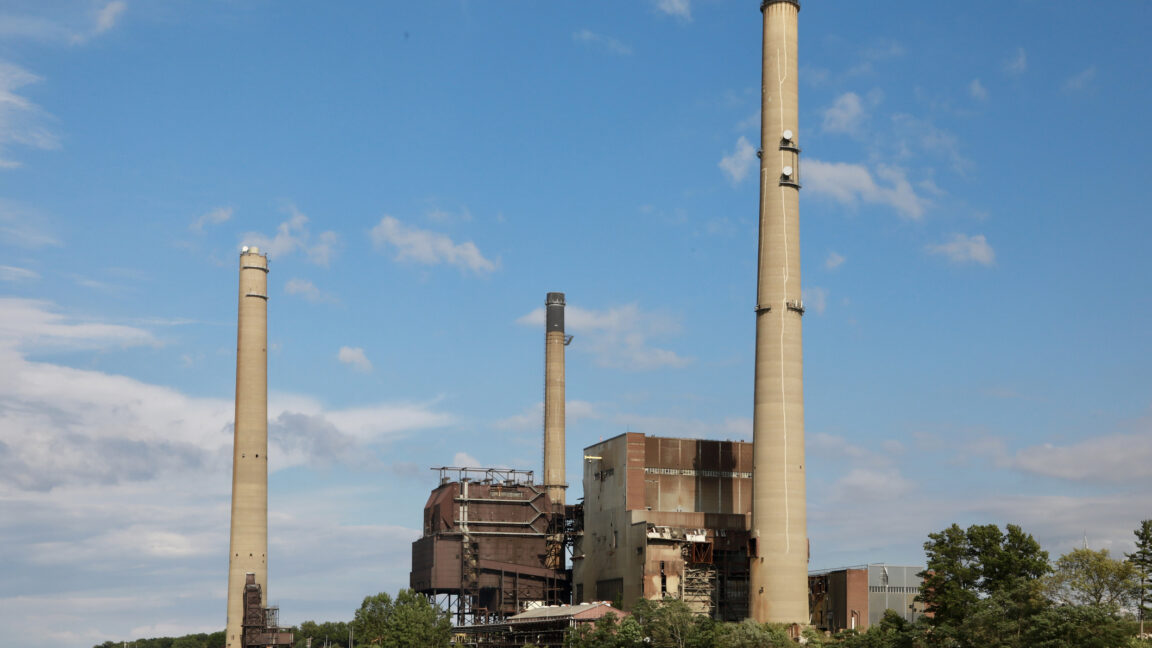
Trump admin tries again to revive dying coal industry

1 Share

On Thursday, President Donald Trump announced his administration's latest attempt to prop up the US coal industry during an incoherent press event that randomly oscillated between energy issues and Trump's fixation with building and renovating monuments in DC. The energy portion of the events was also frequently disconnected from reality.

"Today we're taking historic action to bring down the price of energy and the cost of living for all Americans with the power of clean, beautiful coal," said Trump, apparently unaware that coal is one of the most expensive means of generating electricity in the US.

With wind and solar power getting cheaper, coal has become the second-most expensive way of producing electricity, trailing only the cost of building a new nuclear plant. As a result, no new coal plants have been completed in over a decade, and coal has gone from powering over half the electrical grid to producing only about 15 percent of the nation's electricity. That's before the indirect costs of coal use are considered. It produces the most greenhouse gas emissions per unit of energy, releases dangerous particulates and chemicals into the atmosphere, and leaves behind ash that has high levels of toxic metals.

That's reality, but the White House is clearly not inhabiting it. "If you look at some of the real great failures, countries, they're usually wind," he proclaimed. "It keeps blowing, blowing, blowing and puts you right out of business. Very expensive. The most expensive energy there is."

He also suggested that China, which produces roughly half the wind energy in the world, isn't actually using it: "About the only time they build [wind turbines] is to sell them to stupid people in the United States."

Despite the economic issues with coal, Trump claimed that his new effort to stall its decline will save $50 billion in electricity costs. The source of that figure wasn't specified.

The $700 million would be spent under the Defense Production Act, which allows the president to protect industries deemed critical to national defense. An amendment to the act, passed in 1980, added energy to the list of industries where the president can intervene. A New York Times report indicates that much of the money for this comes from a fund Congress created to foster carbon capture development.

Much of the money will go toward updating 14 coal plants that might otherwise be shuttered. That's in addition to the plants that the government has simply ordered utilities to keep open. In addition, funds would go toward the construction of new coal plants in Alaska and West Virginia, which would be the first new plants built in the US since 2013.

The Department of Energy funding would be coupled with private investments. But these represent a significant risk. The rapid pace of renewable energy growth is likely to continue, and the price of energy from coal will likely rise as soon as the EPA returns to enforcing existing regulations, something that may happen before construction of the new plants is even complete. So to the extent that this effort succeeds, there's a reasonable chance it will produce stranded assets.

Read full article

Comments


Read the whole story
Share this story
Delete

How some data center operators are tackling their water use problems

1 Share

On Monday, SpaceX amended its initial public offering to state that water conditions—including water scarcity, regulations around water, and drought—could constrain data center development.

It isn’t the only tech company trying to assess how water scarcity might impact its business. Water use is emerging as one of the most contentious data center issues. A recent Gallup poll found that seven out of 10 Americans are opposed to data center development, with water scarcity ranking as the top resource concern. Facing increasingly fierce resistance, some tech companies are scrambling to assure the public that they’re facing the issue head-on.

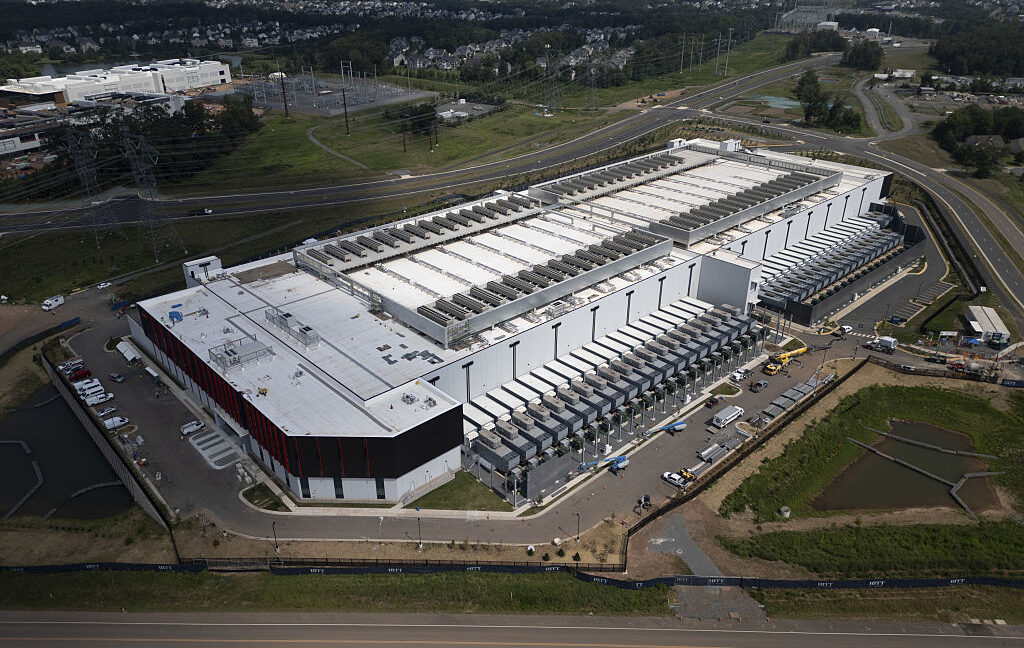
Data centers primarily use water to cool server racks, which throw off massive amounts of heat. One popular technique, known as evaporative cooling, uses fresh water to absorb the heat, which is then pumped to cooling towers where it evaporates outside.

Using more water can save money and reduce emissions for big tech companies by reducing the power needed for cooling that relies on energy-intensive pumps to recirculate water. But it can also come with a large water footprint: Google’s facility in Council Bluffs, Iowa, for instance, which uses evaporative cooling, consumed more than 1 billion gallons in 2024.

Lawrence Berkeley National Laboratory predicted in a 2024 report that hyperscale data centers could consume up to 33 billion gallons of water by 2030 if they relied heavily on evaporative cooling. That’s on par or even less than other thirsty industries, like agriculture or oil and gas—a single fracked well can use 1.5 to 16 million gallons of water—but it poses a risk in regions where water is already scarce. The risk is particularly acute in summer, when data center cooling needs tend to skyrocket at the same time as municipal water use.

“Water is a highly local, highly regional issue,” says Shaolei Ren, a professor of engineering at UC Riverside. “It's a limited resource, and we have to manage it very carefully.”

Some tech giants, including Microsoft, OpenAI, and Oracle, have made statements in recent months indicating that they are moving away from evaporative cooling entirely in order to save water. That includes OpenAI and Oracle’s massive Stargate expansion in a number of states, including a water-stressed region of Texas.

Google is taking a different approach. On Wednesday, the company rolled out a series of water-related commitments to communities where it has data centers, along with funding announcements for water-related projects in the US.

They include pledges to replenish more freshwater than the company consumes, via investments in local water projects; to scale up the use of reclaimed and recycled water; and to disclose annual water use in data centers. (Other tech companies, including Microsoft, have similar promises around water replenishment and local investment. Google has been working on most of these pledges for a few years.) There’s also a promise to use “a data-driven framework” to decide what data center designs would work best with local watersheds.

Ben Townsend, the global head of infrastructure and sustainability at Google, says that data center design is a lot more complicated than simply swearing off one type of cooling in all cases. The company, he says, has been doing detailed hydrologic assessments of its sites for the past four years to determine what types of cooling would work best.

“Water is scarce in some regions and plentiful in others,” he says. “A one-size-fits-all strategy just doesn't work.”

In April, Google defended evaporative cooling for areas with what it called “abundant” water in a filing to the European Union as necessary for developing truly sustainable data centers. Google’s arguments line up with new research from Ren and his team, who found that if all data centers in the US were to adopt some kind of evaporative cooling during peak demand, it could free up an additional 10 to 30 gigawatts of power. In areas where grids are stressed but water resources aren’t, using evaporative cooling could provide a meaningful headroom to utilities trying to balance load.

“If you don't use water, the challenge is that you're going to be using a lot more power in the summer, and that will push up the cost,” Ren says.

Most tech giants, including Google, have seen their carbon emissions skyrocket as a result of the AI boom. Totally avoiding evaporative cooling could increase emissions if data centers rely on dirty energy to keep facilities cool. Using less evaporative cooling could also mean more water used offsite for electric generation, depending on how data centers are getting their electricity.

Despite efforts to curb water use, tech companies are still struggling to do so—and it could eventually impact business. Even as Microsoft is moving away from evaporative cooling, The New York Times reported in February that the company’s internal records indicate that its water use is set to skyrocket. In 2024, Google halted plans for a data center outside of Santiago, Chile, after a court partially revoked its permits over water concerns. (The permits for that data center were granted in 2020; Townsend says the company adopted its water scarcity framework for new locations a few years after that.)

In 2021, Google funded a lawsuit filed by a town in Oregon fighting a local newspaper to avoid disclosing how much water the tech giant would use for an expansion of its existing data center. The company began disclosing water use from specific data centers in annual reports in 2023.

Priscilla Johnson, an independent consultant who served as Microsoft’s director of water strategy between 2017 and 2020, agrees with Ren that there’s trade-offs between water and power. However, she says, there are ways to push companies to develop better designs that use both less water and energy. Public pushback and regulation, she says, is crucial.

“The industry has to be challenged to design smarter and simplify things,” she says

This story originally appeared on wired.com.

Read full article

Comments


Read the whole story
Share this story
Delete

DOJ opens investigation into George Santos for insider trading on Kalshi

1 Share
The recently-incarcerated former congressman George Santos allegedly placed bets on himself, then acted to ensure he won.

Read the whole story
Share this story
Delete

Trump Administration to Dismantle Ocean Monitoring System

1 Share
The Trump administration is moving to dismantle the National Science Foundation's $368 million Ocean Observatories Initiative, a network of more than 900 deep-sea instruments used to monitor ocean currents, marine ecosystems, carbon absorption, heat waves, fisheries, coastal flooding, and climate change. The NSF said it would send ships in June to begin the removal of the instruments anchored off Oregon, Washington, Alaska, North Carolina, and an area between Greenland and Iceland known as the Irminger Sea. The New York Times reports: The ocean observation system began operating in 2016 and was expected to continue for 25 years. Jim Edson, a marine meteorologist who led the Ocean Observatories Initiative, called it "the world's most advanced continuously operating ocean observing systems." When it was first proposed, the science foundation said it was important to have a long-term presence at scientifically important sites in the Atlantic and Pacific oceans. Removing the instruments could take 15 months. Seismic instruments positioned around an active underwater volcano off Oregon will continue operating until 2028. Each observation station consists of several moorings that secure long arrays of devices connected to wires. The devices measure ocean currents as well as chemical and biological conditions from the water's surface down thousands of feet. The instruments were hardened to resist the pressure of the deep ocean, corrosive seawater as well as marine plants and animals that can foul electronics. Remotely controlled robotic vehicles and gliders around the moorings collect and transmit data to research laboratories. It cost $48 million annually to operate the network. The Trump administration repeatedly tried to shutter it, proposing to cut its funding by 80 percent in both 2025 and again in 2026. Congress pushed back, restoring the money. To try to reduce costs, managers turned off some of the instruments and collected less data, according to a December 2025 presentation about the observatories at the annual meeting of the American Geophysical Union, a nonprofit organization of scientists. Still, the science foundation moved ahead to decommission the observatory network.

Read more of this story at Slashdot.

Read the whole story
Share this story
Delete
Next Page of Stories